Friday, May 13, 2011

The Great Underarm Campaign.

Last summer, the NY Times published an article prompted by Mo’Nique lifting her dress at an awards ceremony to reveal her unshorn legs. It was entitled "Unshaven Women: Free Spirits or Unkempt." I am a bit of a free spirit and I am definitely more than a bit unkempt; I remember this article speaking to me on a very personal level. I have always disliked shaving. The process forced me to stay in the tub for longer while my fingers and toes turned to prunes, and it usually ended with me nicking myself and developing ingrown hairs. The article caused me to question my involvement in this arduous undertaking. The more I questioned, the more unnecessary it seemed. So I stopped shaving. But I soon became self-conscious around others who informed me that "not shaving is a signifier for being lesbian" and asked if I had begun identifying as 'butch' or 'ftm' (really!) but nope, hairy pits or not, I identify as a female and a (begrudgingly) heterosexual one at that.
Julia Roberts circa 1990-something, lookin' sexy and hairy
There is no denying the pressure on women, from men and each other, to be hairless.
Recently I did some research and found that King Camp Gillette (if your first name is 'King' you're bound to be at least a little bit of a douche) patented his first safety razor in 1901, thus beginning the creation and domination of the shaving market. Gillette teamed with the U.S. Army in a large and profitable marketing venture, and handed a razor to every enlisted man in the army during World War I. During the same time, Gillette was trying to find a way to expand his reach. He was motivated by the same thing that motivates any corporate campaign. Greed. That coupled with a seemingly mundane development in fashion - sleeveless dresses - marked the beginning of "The Great Underarm Campaign.”
In 1915 Harper’s Baazar published the first advertisement featuring a woman with shaved “underarms.” From this point the campaign turned female body hair into something “objectionable" because, as the ad read, “the woman of fashion says the underarm must be as smooth as the face.” And, by 1922 (two years after women won the vote), Gillette and the advertising barrage had won the underarm hair fight. They didn’t win the leg hair fight as easily as the length of skirts didn’t mandate shaving. However, by the 1930′s we’re not only shaving it all off we’re waxing it off!
Okay... so almost 100 years later why are we STILL shaving? Why do so many women shave, pluck, wax, burn, trim, bleach, dissolve, laser or otherwise remove every inch of body hair? "Being hairless is a patriarchal beauty standard that works toward infantilizing women and making them men's property and decorations," wrote an anonymous poster on a Yahoo! board. While this comment wasn't received too favorably, I have a hard time disagreeing with it.
Having body hair is not dirty, unsanitary or unfeminine. Underarm hair is there to protect your skin (note: your skin doesn’t develop those annoying little red bumps for nothing.)
This may seem counterintuitive due to all of the bad press your body hair gets! It has become such an ingrained, unconscious part of our culture that it’s an assumed responsibility as opposed to a choice. The first time a former boyfriend of mine commented on the fact that I hadn’t shaved my legs in a couple of days: it hit me. How ridiculous! And also, how dare you!
I’m not going to sit here and tell you that you have to be hairy to be a feminist. You don't. Wake up every day and make your decisions... But make sure they are informed, conscious and entirely your own.
Amanda Palmer being a badass

Tuesday, April 19, 2011

Feminist and...anti-choice?

Earlier this morning, I came across a webzine called Zelda Lily: Feminism In a Bra. As if its title, a thinly-veiled jab at the 'bra burners' of the second-wave movement, wasn't irksome enough, Zelda Lily's mission statement reads: "[we aim] to redefine feminism... A woman can run a hospital. A woman can run a salon. A woman can play football. A woman can host a dinner party. A woman can be a single mother. A woman can be pro-life... "
Of course women can (and do) execute all of the above roles, but reading Zelda Lily's mission statement gave me a strange feeling in my stomach. Is it possible to be feminist and be pro-life (read: anti-choice)? Plain and simple, no.
Self-determination is the cornerstone of third-wave feminism. You can absolutely be a feminist, be pro-choice, and believe that you personally would never choose abortion for yourself. A feminist understands that a decision such as whether or not to bring a child into this world is not theirs to make for someone else. It is inherently sexist to force a woman into mandatory motherhood.
You cannot be a feminist and be anti-choice. This is non-negotiable.
My favorite definition of feminism was written by bell hooks: "feminism is a movement to end sexist oppression." This sexist oppression is entrenched in patriarchy. Patriarchy, the cultural-social-political system within which our culture is rooted, is a powerful entity that does irreparable damage to both women and men. It has the ability to convince those it subordinates that it knows what is best for them. Groups such as Feminists for Life and the Susan B. Anthony List promote a patriarchal agenda, preying on women who find themselves in a situation that nobody wants to be in: pregnant and unsure of what to do.
To call yourself "pro-life" is to, in effect, call yourself "anti-feminist". Zelda Lily fails to recognize that the self-determination feminism promotes is not about having the freedom to label yourself either "pro-life" or "pro-choice". It is about understanding that women deserve agency without fear of retribution from a patriarchal culture, and the ability to choose what is right for us in our lives, individually, free from shame, free from judgment, and free from the shackles of patriarchy.

Saturday, March 19, 2011

Why NOT to shop at Urban Outfitters.

Listen up, lovers of ironic t-shirts, skinny jeans and faux-vintage apparel. Your beloved hipster mecca, otherwise known as chain outlet Urban Outfitters, has a few skeletons in its pseudo-bohemian closet. Superficially speaking, UO could pass for an independent retailer - its target base is young, educated urban consumers; its products cater to an 'indie' niche; its speakers blast Pitchfork's 'best of'' playlist on repeat - morally, however, the store is aligned with massive corporations like The Gap and even Walmart.
With over 75 stores in the United States and roughly 150 stores globally, Urban Outfitters is a multimillion-dollar operation that outsources their clothing from sweatshops in countries like China that utilize child slave labor. LongView Funds, a mutual fund company with a stake in Urban Outfitters Inc., urged the company to adopt international labor standards in 2008. UO declined to adopt and disclose a code of conduct based on basic, internationally-recognized human rights. They instead released a statement saying they "expect[ed] suppliers to adhere to child-labor laws."
If Urban Outfitters is getting its apparel mass-produced in factories across the sea, how does everything look so cool? For starters, the styles are often stolen from local designers. Lillian Crowe, a Brooklyn-based jewelry designer, sells necklaces featuring a rib cage, a spine and the skull of a bull. She recently discovered shockingly similar pieces in the UO catalog. John Earle, graphic artist and creator of online t-shirt vendor Johnny Cupcakes, gladly obliged when Urban Outfitters asked for a few sample designs to be considered for placement in their stores. UO chose not to carry Johnny Cupcakes' products: they instead stole Earle's original art, remaking two of his designs into extremely similar t-shirts under their 'Urban Renewal' label. Urban Outfitters solicited t-shirts from an artist, then stole his concepts after choosing not to license his work. To think that UO panders to an 'artsy' demographic. Urban Outfitters v. Johnny Cupcakes
Moreover, the political bent of UO President Richard Hayne would likely dismay the young, progressive crowd that his company attracts. Richard Hayne, whose net worth is $1.8 billion, donated tens of thousands of dollars to former Senator Rick Santorum (R-Pa.) - the same politician who compared homosexuality to beastiality in a 2003 interview with the Associated Press.
Urban Outfitters is just one example of a company that projects an image completely different from what its executives are really all about. This incongruity represents a common, troubling phenomenon in retail.
The Gap and Lord & Taylor are widely regarded as classy merchandisers with high-quality apparel, yet BehindTheLabel.org, an online news magazine that covers sweatshop issues in the global clothing industry, cites them as "responsible for the global sweatshop crisis." Starbucks touts itself as a "responsible" company that has a "positive impact on the communities [it] serve[s]", yet similarly exploits foreign labor and has been additionally attacked for using genetically modified ingredients. In an ideal world, companies would wear their hearts on their sleeves; their products would reflect not only what they believe, but also their actions.
If goods are manufactured in a locale where the wages paid are significantly lower than US minimum wage, it's sweatshop labor. If the workers manufacturing those goods would be considered minors and subjected to US child labor laws, it's sweatshop labor. How to begin your life as a conscious consumer? Checking the tag for that 'Made in the USA' affirmation is a great first step.

(Or try consuming less. There's an idea worth considering...)

Tuesday, January 11, 2011

Burn The Earth! Leave It Behind!

Pat the Bunny was a transient: a freight train hoppin', pill poppin' anarcho-punk. He was as pissed off as he was intelligent, which is to say very. Pat left his hometown of Brattleboro, Vermont as a teenager to live the life of a vagabond and share his acoustic punk rock songs with anyone who gave a shit. Pat, née Patrick Schneeweis, performed as both Johnny Hobo & the Freight Trains and Wingnut Dishwashers Union. While he has all but disappeared since entering year-long treatment for addiction, his music found its way into my life rather recently.

Burn the Earth! Leave It Behind is an album that will slowly scratch itself into your psyche, and your soul. His songs are both clairvoyant and caliginous: he expresses and articulates his anger at unjust social norms, while remaining cryptic about his own personal life. After my first listen, I felt as if I knew Pat the Anarchist. But it wasn't until my upteenth listen that I began to understand Pat the Human. An anxious, sensitive, whip-smart fuck up.

Pat's music makes me question myself, my beliefs and values. But it's also really fun and catchy as fuck. The anarchistic rantings of a homeless man never sounded so good.

Download Burn the Earth! Leave It Behind

Monday, August 2, 2010

Jihaaaaad

Andrew Jackson Jihad sound like Woody Guthrie's bastard son.
And that's a damn good thing.
AJJ play straight up folk-punk: earnest and unplugged yet gritty and raw. Its two core members, Sean Bonnette (guitar / vox) and Ben Gallaty (bass), have worked with a slew of constantly alternating musicians since the band's 2004 inception. Bonnette, who strums his acoustic axe with string-popping intensity, has a knack for writing confessional songs about his love / hate relationship with Parliament cigarettes and his antipathy towards hipsters, as well as the abusive stepdad who fucked up his childhood. He admittedly sounds a lot like the dude from Neutral Milk Hotel - which kinda make sense, considering AJJ released a pitch-perfect cover of "Two-Headed Boy". Sean's songs tightrope-walk the line between personal and political - exploring both intimate and far-reaching topics with intelligence and humor. The Arizona-based band decries Immigration SB 1070 Law on their excellent "Lady Liberty".

Needless to say: their latest release, 2009's Can't Maintain, is pretty killer.

Download their magnum opus: People Who Eat People Are The Luckiest People In The World

Saturday, May 15, 2010

Heaven Is Hold Steady.

Craig Finn ain't much of a singer, but the man sure spins a mean yarn. And for those of you naysayers who claim his songs rely far too heavily on brawny rock rhythms and Daedalean wordplay: Heaven Is Whenever, his band's fifth LP, will surely put your naysayin' to rest. Over the past few years, The Hold Steady has become synonymous with chugging guitars and earnest tales of "boys and girls in America". But after 2008's comparatively dull Stay Positive, fans couldn't help but wonder what the future held for the Brooklyn band. Were they destined to become another Springsteen-sound-alike: frontman Finn singing of mill towns and motorbikes with the same puffed-chest clout as his Jersey hero? Nah, dude. Finn is, for all intents and purposes, a nerd! He's a chubby thirtysomething with a nasty bout of male pattern baldness. Wendy isn't going to wrap her legs around him! Hell, she'd more likely laugh in his face then throw her diet coke on his freshly pressed button-down. And he got the memo. "You can't get every girl. You'll love the ones you get the best," he comforts a younger version of himself on the excellent "Soft In The Center", adding in, "I know what you're going through. I had to go through that too." The Hold Steady has returned to their Almost Killed Me roots. Screw concept albums – the only concept tying this album together is the concept of human experience. Their mustachioed keyboardist Franz Nicolay is notably absent. And while his fills and riffs were certainly an integral part of the group's sound, there is no mistaking the fact that this is their freshest sounding release since 2006’s Boys And Girls In America. That slide guitar on "Sweet Part of the City"? Dope. Finn's finest moment, however, comes in the form of a simple love song. "We Can Get Together" is about sitting on your beloved's bedroom floor, listening to a timeless record that stirs up the most wonderful kind of nostalgia. Heaven Is Whenever could easily become said timeless record. Saturated with warmth, humor, honesty - it is truly an album for the ages.

Monday, March 29, 2010

Live At Massey Hall 1971

Sifting through Youtube videos of Neil Young, I noticed one user's sage comment: "Neil never smiles." But with the topical themes of his songs and the haunting timbre of his voice, who can really blame him for an often-neglected sense of fun? A few weeks ago I stumbled across Young's Live At Massey Hall 1971. In addition to two never-released songs (the entrancing "Bad Fog of Loneliness" and the pulsing romp "Dance Dance Dance"), the album features stunning live renditions of his most poignant numbers. "Ohio" is all the more powerful in its acoustic incarnation; the defiant political rocker is elevated to a new level of stripped-down emotional vulnerability. "How can you run when you know?" sings Young, his fear and indignation audible. Live At Massey Hall 1971 is a remarkably rich collection of songs, so full of Young's essence: the social consciousness, the sensitivity, the sweetness. His mumble is modest and sincere, if somewhat somber. Maybe Neil Young wasn't such a smiley guy - but the breadth and depth of his emotional palate make smiling seem all-together irrelevant.

Friday, March 5, 2010

Faves of the Aughts.

As the decade drew to a close, I began to ponder what my favorite albums of the 00's (more simply the "aughts") were. Here's what I came up with.

Morrissey – You Are The Quarry (2004)
Most pop stars have to be dead before they reach the iconic status Steven Patrick Morrissey has achieved within his lifetime. Morrissey sheds his enigmatic, sexually ambiguous Smiths persona on You Are The Quarry. His sumptuous baritone wells with intense emotion as he denounces Oliver Cromwell, the Tory Party and the repressive Catholic Church that turned his childhood into a living hell. Amidst sensitive balladry and cathartic stompers, swirling piano and serrated guitar, Morrissey steps into the spotlight as a human being complex and flawed, on an album that is complex and flawless.

Nickel Creek – Why Should The Fire Die (2005)
Since their 1993 debut, the progressive bluegrass group has been composing melodically masterful tunes complete with lush three-part harmonies and charming twang. But what differentiates Fire from their other albums? This album really rocks. The string band remained traditional in their use of acoustic-only instrumentation, but their sonic scope broadened dramatically. The chromatic lilt of “Jealous Of The Moon”” is more reminiscent of R.E.M. than Ralph Stanley. With Why Should The Fire Die, Nickel Creek carried the American tradition of bluegrass into the 21st century.

Arctic Monkeys – Whatever People Say I Am, That’s What I’m Not (2006)
Alex Turner was a 16-year-old Brit with big ears, a thick Cockney accent and keen observational abilities. When Turner decided to pick up a guitar and put his stories – inspired by drunken teenagers, young prostitutes and North England nightclubs – to music, the result was a prolific punk outfit with a sound as raw as their message. In the span of thirteen songs, Turner and company encapsulate the gritty realities of an angry, exploited generation. Remember the teenage wasteland that The Who described in “Baba O’Reilly”? New generation, same wasteland.

Wednesday, March 3, 2010

I Love Liz.

Words fail to capture the importance of Liz Phair's 1993 debut, Exile In Guyville. I can only begin express my feelings towards the album via hand gestures and facial expressions. Have you ever had that transcendental moment alone on your bedroom floor, listening to that certain album with tears streaming down your cheeks? There's something very essential and not at all girly about the experience of being literally moved to tears by a work of music that speaks on such a personal level, you can't help but think it was written with you in mind. Exile In Guyville tore me to shreds. When I first laid ears upon Phair's splenetic snarl, all of my preconceived notions about communication and gender roles in relationships were challenged and shattered. Liz uses her sharp tongue and equally sharp brain to explore natural human impulses. Her narrative is unfiltered, uncensored, honest, raw. Exile In Guyville is an album that centers around themes of love and sex, with lyrics that are never safe or sentimental. The song that brought me to the brink was "Fuck And Run", which explores how destitute, how heartbreakingly bleak physical love is in the absence of genuine human connection. Liz has this wonderful way of making herself vulnerable yet retaining the ability to sound like she can kick your ass at any given moment. The album is uniformly lo-fi, full of scratchy guitars and the low, almost-masculine tonality of Liz's voice. Her music is where tough meets tender: she is opinionated, often angry, yet compassionate and introspective. Exile In Guyville became my adolescent spirit guide, helping me navigate this mine-strewn journey through its frank study of relationships, carnality and self-discovery. This is not a pretty album. It doesn't coddle, it doesn't preach and it's a must own for any teenage girl.

Tuesday, February 23, 2010

Last year was a good year.

2009 was pretty solid. Politically speaking, this country underwent a major change of government. Sonically speaking, this country underwent a major influx of indie music. I mean, who's to complain? Despite the fact that February is coming to a close, I've decided to detail a few of my favorite albums that came out last year 'cause I'm a rebel and I do as I please.
Animal Collective – Merriweather Post Pavillion
The neo-hippies have done it again! At once reminiscent of sixties folk and psychedelia, Animal Collective will sneak up and surprise you with the sudden pulsing bass line or unusual vocal loop. Merriweather is a work of experimental genius, merging melody and riff-structure with swarming textural chaos in the boldest and most beautiful album of the year.
St. Vincent – Actor
St. Vincent, née Annie Clark, sings like an angel and shreds like a demon. The super-skilled guitarist/vocalist/composer will throw in woodwinds and saxophones amidst densely layered guitars and industrial drums. At times lush and bright, and at other times sparse and macabre, this Brooklyn goddess has both the charm and the chops to keep us hooked.
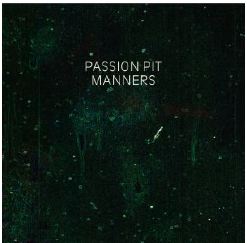
Passion Pit – Manners
Manners is a bit of an oxymoron – giddy, infectious rhythms juxtaposed with heart-broken, reflective lyrics. But hey, it works! Passion Pit concocted the perfect mix of organic instrumentation and Velveeta-smooth synths on an album that shines with a cosmic, unearthly beauty yet is filled with themes of all-too-earthly desperation and loneliness.
Neko Case – Middle Cyclone
Straying from her alternative-country roots, Neko took a cue from her bros in New Pornographers with this album, a piece of power-pop perfection. She explores the ins and outs of love from an array of perspectives: a teenage bride, a jilted lover, a smitten wind vortex. Her thick, warm vocals maintain a maple-syrup consistency, oozing over the tracks with sweet soulful ease.
Sonic Youth – The Eternal
The boldly bizarre Sonic Youth has been reinventing punk for the past thirty years and they show no signs of slowing down. From atonal riffing, shrieking guitars, pounding drums, excessive feedback, and Kim Gordon’s frenzied wails – this album has got the goods that Sonic Youth fans crave.

Tuesday, February 2, 2010

Veguary rocks.


Veguary refers to the second month of the year (February! This month! Right now!) in which those enthusiastic about improving their health, fighting global warming, or simply taking an ethical stance, eliminate meat from their diets. Veguary offers carnivores a nice lil' allotment of time (come on, it IS the shortest month of the year...) to try and reduce their meat intake. This Veguary, I'm stocking up on tofu and seitan - stickin' it to the man (otherwise known as the meat industry) one soy burger at a time.
It's a known fact that vegetarians are generally quite sexy individuals. In fact, a few of my favorite musicians continue to promote a healthier world through their vegetarianism. Morrissey (pictured) is an avid crusader in the fight for animal rights. If the Irishman's sensitive balladry hasn't taught us anything, Moz will gladly lend his beautiful voice to the voiceless: whether the 'voiceless' in question is a human being or, erm, a baby chicken. His band, iconic '80s mope-poppers The Smiths, even released an album entitled Meat Is Murder.
Not a Morrissey fan? Well, I bet you're a Beatles fan! (Oh come on, we all are.) Paul McCartney and John Lennon: both vegetarians. George and Ringo were both veggies too.
Radiohead's wunderkind Thom Yorke maintains a vegetarian lifestyle as well. Not so surprising, as he seems like a pretty enlightened guy.
From Kurt Cobain to Alanis Morrissette, the dudes from Rage Against The Machine to the lovely ladies of Indigo Girls, - vegetarianism attracts all different types of people who want to create positive change and confront prevalent problems that threaten the well being of our planet.

Saturday, January 9, 2010

Buffy Sainte-Marie Fights On.


How many songs have been written about the Native American Genocide?

Hardly any. And why is that? Music has been the means for thrusting important issues into the social consciousness ever since Stephen Foster wrote "Hard Times Come Again No More" in 1855. In fact, a strong sociopolitical narrative is often considered the definitive trait of American songwriting. So why hasn't anyone ever sung of the 500-year-old war known as the American Indian Holocaust?

Actually, someone has. Her name is Buffy Sainte-Marie.

The 68-year-old singer/songwriter/musician/composer/educator/activist has released twenty-two albums since her debut in 1964 and shows no signs of slowing down. Her voice – she has a skillful, chilling vibrato and a howl that curls tight and spreads wide - is an instrument in and of itself.

Often portrayed as a flower child of the sixties, Buffy's message extends far beyond the pacifist sentiments expressed in her most well known song, "Universal Soldier", which was made famous by Donovan. She explored drug addiction on "Co'dine" (later covered by Janis Joplin) and sexual abuse on "The Incest Song". While she examines explosive topics with sharp insight and wisdom, her main focus has always been the Native American - particularly the Native American woman - struggling to overcome the "blue, white, and scarlet hypocrisy."

Her first album, It's My Way!, received rave reviews from the New York Times but failed establish her as a household name. On its opening track, "Now That The Buffalo's Gone", Ms. Sainte-Marie sings, "When Germany fell to your hands / You left them their pride and you left them their land / And what have you done to these ones?" Did she ever credit her lack of popularity to her radicalism? Did she ever try to censor her subject matter? No way! In fact, quite the opposite occurred. Her next album featured a song called "My Country 'Tis Of Thy People You're Dying" - a seven-minute attack on the foundation of this country.
No wonder Buffy Sainte-Marie was blacklisted by Lyndon B. Johnson in the 1970s. The government fought to suppress her scathing, topical music. "Everything changed when Lyndon Johnson started censoring artists of whom he disapproved. By the middle sixties, music business interests had gotten control of the scene. Coffee houses which had started out as free speech platforms of student opinion found themselves hassled and in tax trouble. The coffee houses that survived did so by reopening with liquor licenses. Alcohol is a different scene from coffee; so is the music, so are the words, and so is the crowd," Ms. Sainte-Marie has said.

While blacklisted and banned from radio, Sainte-Marie joined the cast of Sesame Street. She would be a regular on the show from 1976 - 1981, often appearing with her young son, Dakota. She used the show to introduce children to aspects of Native American life that she felt were misrepresented by existing educational materials. In one groundbreaking episode, Ms. Sainte-Marie breastfed her son in front of Big Bird."[There was] no titillation factor at all," she has said of the incident. Sainte-Marie's image followed a similar mantra: there was absolutely no titillation factor. Instead she embraced her womanhood as a strength. She stirred controversy baring one of her breasts on the cover of her 1974 album, Buffy, but to this day she maintains that it was a personal decision and not her record label’s ploy to sexualize her image. "Of course, Sears put a pasty on it," said Sainte-Marie in a 2009 interview, "...But I feel as though breasts are personal and sexuality is personal and I have a right to talk about it. There were a lot of people burning bras in those days, and there were a lot of women going topless. I think breasts are beautiful, and I don't like the idea of them being considered smut. ...A couple years later I was breastfeeding on Sesame Street. It's the same attitude."

In tandem with her politics, Sainte-Marie's music never lost its edge. A great innovator, Sainte-Marie was a pioneer of electronic music. In 1966 she began working with synthesizers, and began scoring films, creating some of the earliest electronic soundtracks. She multi-tracked her mouthbow, a unique instrument she had created using a traditional Native American hunting bow and steel guitar strings, for Mick Jagger's first movie in the early 1970s. In 1989, she made the very first digital album to be delivered via the fledgling Internet. This album, Coincidence and Likely Stories, contains her tour-de-force performance, "Bury My Heart At Wounded Knee":

Ms. Sainte-Marie continues pushing boundaries and challenging beliefs on her newest album, 2008’s Running For The Drum. Buffy’s fierce originality coupled with her killer lyrics equates for one hell of an album. She’s never sounded so contemporary: she outdoes M.I.A. with the tribal-funk of “Working for the Government”. Buffy also begins to sing passionately about a new topic – global warming and the environment.

"[When I was blacklisted] I had figured I was just too weird for America, which was becoming very conservative. Powwow rock, mouthbows, passionate vibrato, high-heels, Indians, protest songs, electronic music: too much for some people. …For me, to move from being gagged and thought suspect to speaking out about Indian rights on Sesame Street was perfect. I was being denied an adult audience because I couldn’t get airplay, but I got to speak to kids before they got into stereotyping… and tell them the simple message: Indians exist."

Saturday, December 19, 2009

Christmas Wrapping.


Ah, Christmastime. Department stores blast heinously over-played jingles, radio stations refuse to play anything but carols for the entire month of December. Singers further commercialize themselves by churning out “holiday” albums filled with souped-up versions of seasonal standards. Does Christmas music make you want to gag? Listen to these eight songs and think again.

River – Joni Mitchell
Joni recounts the ways corporations bastardize the holiday’s true meaning. It’s the only Christmas song she’s ever released, and needless to say, it’s brilliant.

I Won’t Be Home For Christmas – Blink-182
The pop-punkers get violent on a group of pesky albeit well-intentioned carolers and spend Christmas night in jail. Merry indeed.

Jingle Bells – Barbara Streisand
What happens when a record label forces a nice Jewish girl, like Babs, to crank out a song in the Christmas spirit? She takes the reindeer by the horns and comes up with an endearingly theatrical, thoroughly entertaining track like this.

Santa Baby – Eartha Kitt
Hands down the sexiest song ever written about the bearded man in red. It’s feminine, alluring, and cute as hell. I don’t think anyone is immune to its charm.

This Christmas (Please Come Home) – Death Cab For Cutie
A really good Death Cab song is warm, earnest and sincere. Ben Gibbard’s voice is ripe with genuine emotion on this beautifully simple song, which easily falls amongst their best.

The Christians and the Pagans – Dar Williams
A conservative Christian man is visited by his lesbian niece and her partner for Christmas dinner. They’re able to put aside their differences on this heartfelt, intelligent song.

Jesus Walks – Kanye West
If one song could make this apathetic atheist pine for a seat in the church pew, this would be it. “They say you can rap about everything except for Jesus / that means guns, sex, lies, videotapes / but if I talk about God my record won’t get played.” Kanye takes Christianity to the streets with fervent soul.

Happy Xmas (War Is Over) – John Lennon
To John, Christmas is a time of hope for a peaceful future. The bittersweet ditty rings more relevant than ever.

Wednesday, November 25, 2009

Review: Monsters Of Folk - Monsters Of Folk


Forget Locking Your Closet: 
These 'Monsters' Ain't Scaring Nobody.

(From L-R: Oberst, Mogis, Ward, James)

On paper, Monsters Of Folk sounds supremely awesome. A "supergroup" consisting of the biggest names in twenty-first century folk music: My Morning Jacket's Jim James, whose sweet tenor melts like maple syrup over his group's alternative country-tinged tracks; Bright Eyes' prolific lyricist and vocalist Conor Oberst, plus multi-instrumentalist Mike Mogis; and lastly, indie singer/songwriter M. Ward, who wields his acoustic axe with purpose and plays with notable attention to detail. Unfortunately, this album suffers a nasty bout of lazy lyricism and even lazier production. While Oberst lays off the warbly affectation, one can't help but miss the stripped-down sincerity of his solo work. The overuse of reverb and echo distract from the group's masterful harmonies. Oberst's Dylanesque musings are MIA: instead, listeners are subjected to choruses full of "la la la's". The Monsters' real accomplishment is the instrumentation - a carefully concocted soufflé of skillful strumming, finger-picking and delicate solos. Props to Master Chef, M. Ward. While MOF makes for elegant aural wallpaper, the record left me wishing these folkies would put down the pipe and stop folkin' around.

Grade: B-/C+

Key Tracks: Say Please, Magic Marker

Wednesday, November 11, 2009

Reviving the Long-Lost Art of the Music Video


GaGa embraces the occult in her stunning "Bad Romance" video.
Music videos used to be a big deal. Back in the eighties, Michael Jackson and Madonna viewed videos as an extension of their music, an expansion of their art. Nowadays? Videos are all kind of garbage, either filled with half-naked chicks or pouty-faced, guitar-plunkin' morons. But get ready to have your socks blown off with Lady GaGa's killer vid for her brand new single "Bad Romance", off The Fame Monster, an upcoming deluxe edition of her debut, which features eight previously unreleased tracks. Part outrageously awesome dance routines and ridiculous avant-garde apparel - with a dash of eery Tim Burton-style goth thrown in for good measure - this video is where big-budget meets beauty. 

As GaGa crawls out of a coffin, she is faced with sexy cyborgs donning white-leather dominatrix suits in what appears to be an S&M crematorium. She's naked, bug-eyed, and sporting a wonderful red wig. Amidst a shit-ton of costume changes and legions of back-up dancers, GaGa always manages to shine supreme.

As for the song itself? Not nearly as catchy as her past singles. But it's the video that makes it fantastic. There's no doubt GaGa is the reigning Queen of Pop. And a fabulously freaky queen, at that.

http://www.youtube.com/watch?v=ACm9yECwSso

Wednesday, October 21, 2009

The Faux-Feminism of Katy Perry & Taylor Swift


Taylor Swift and Katy Perry both write their own songs, have distinct voices, play guitar, and have become idols for millions of pre-teen and teen girls. And, of course, they’ve both been featured on the cover of that holiest of bibles for the American girl: Seventeen Magazine. But what is the key similarity between Swift and Perry? The inherently anti-feminist beliefs expressed in virtually all their songs.

Taylor Swift is the 19-year-old country crossover sensation, who strums an acoustic guitar encrusted with Swarovski crystals and wears her innocence like a crucifix. “You Belong With Me” is a triumph of girl-on-girl sexism. It’s a pathetic plea to Taylor’s dream boy, begging him to dump his girlfriend for the unpardonable sin of having a life outside pleasing this one dude.

Swift’s newest single “Fifteen” is even worse. Let’s take a look at the music video. It has Swift wandering around in a white dress, barefoot and doe-eyed, reminiscing about high school and her awesome BFF, Abigail. Their one bond seems to be that they both hate other girls who “think they’re so cool” (Really, Taylor, these are the best lyrics you could come up with?!) and that they both have boyfriends. In the video, we find Abigail out on a date. But, oh no, suddenly Boyfriend tries to take things too far! Abigail cannot take this assault on her purity and the relationship must end. Suddenly the CGI-animated raindrops start pouring down and everything looks gloomy. This is a world of purity rings and intact hymens - where only the worst sort of Lothario is less than satisfied with a chaste kiss from his future wife. While it is true that young women are often pressured to go further sexually than initially planned - it is also true that some girls want to go wherever those passionate kisses are leading. And that’s simply not a narrative that gets told here. Instead we receive the ole’ boys GET sex, girls GIVE sex. Taylor gloats, singing about how well things have worked out in her own life. Moral of the story? Girl who gets semi-sexual regrets it, girl who doesn’t get anything sexual ends up happy and accomplished.


Bi-curious pop-rocker Katy Perry presents a different, but equally troubling, role model. She admits to smooching girls for male titillation (“I Kissed A Girl”) and derides a lover for his, supposedly, unmanly ways (“Ur So Gay”). In her hit song “Hot n Cold”, Perry tells a boyfriend: “You PMS like a bitch / I should know,” expressing her contempt for him acting like a typical erratic, unreliable woman instead of the dominant forceful man he's supposed to be. Reading Perry’s interview in Seventeen Magazine was even more crushing. Entitled “Katy Perry: The Crazy Things She's Done For Love”, Perry details how she’ll cling to her phone for hours waiting for a message from the current object of her desire because, “sometimes a text is all you need.” So many girls look to boys to gain a sense of self-worth and validity. Nice way to liberate America's impressionable female adolescent population from the shackles of dependancy and doubt, Katy.


While superficially Swift and Perry come across as strong, autonomous women, they serve to reinforce the traditional idea of women as weak and submissive, and they slyly align themselves with that role. Despite the trappings, the concerns expressed in their lyrics are more Tammy Wynette than Ani DiFranco. Perry and Swift are marketing two distinct caricatures of femininity. Perry is the pin-up girl in leather pumps and a cleavage-bearing bustier, seductively poised for the entertainment of the male, heterosexual masses. Swift is the pious little lamb, obsessively pining over "cute" boys yet touting virginity as her number one virtue. Taylor Swift and Katy Perry aren’t telling us, or selling us, anything new. They're not empowering and they're certainly not original. Their music is as artificial and calculated as any other pop star.  Move along, people, just move along.

Sunday, October 18, 2009

Review: Paramore - Brand New Eyes


Tennessee titans mix adolescent anger with grown-up candor.

“The next time you point a finger / I’ll point you to the mirror,” sings Hayley Williams in “Playing God”, an indignant attack on posers juxtaposed with painfully pretty guitar ripples. The pint-size, iron-lunged frontwoman is all about honesty. Cathartic single “Ignorance” addresses how distrust and tension, results of newfound fame, have negatively affected the band members’ age-old friendship. While the group is barely out of their teens, their third album swaps earnest admissions of love and overall naiveté for a sound that’s more abrasive and fervent—yet also more pensive and nuanced. Make no mistake, Paramore is still pop. But then again, whoever said that raw, truthful music couldn’t be super-catchy at the same time?

Grade: B+

Key Tracks: Playing God, Turn It Off, The Only Exception

Monday, September 28, 2009

New Weezer Single!


It's explosive! It's pop! It's Weezer! It rocks! "(If You're Wondering If I Want You To) I Want You To" is about a doomed summer romance. But the song doesn't boast any undertones of grief or loss. The whole thing is pretty much in the key of "Whew! That was fun." An awkward first kiss with a cute goth chick at summer camp set to a bouncy, guitar-driven melody. And what's more, it takes place in July! The happiest month in the world! Summer lovin' is so gad dang great. And so is this song. Soak it up.

Grade: A-

Psssssst... Weezer's seventh disc, Raditude, drops November 3rd. Here's a-hoping it'll be better than last year's subpar Red Album.

Tuesday, September 22, 2009

Girl Crush.


I have a massive crush on Hayley Williams.


I started falling for Paramore's frontwoman when I first laid hands upon the group's 2007 disc, Riot! Her strong, persuasive singing won me over, but it was her in-your-face, fuck-you attitude that tore me to shreds. As if her pipes of steel (as well as her knack for writing awesomely angry yet hypercatchy tunes) wasn't enough, she's totes adorbs. That gap between her two front teeth? Makes my knees go weak. I had the pleasure of seeing Paramore live not once, but twice, and she's a firecracker. When she throws back her head, red flames lick the sky. While I was flipping through this month's issue of Rolling Stone, suppressing myself from gagging over the skankalicious photos Megan Fox, I stumbled upon an interview with Haylz. She covers a vast range of topics: from her band's tour with No Doubt to what it's like sharing a bus with smelly boys. She also spilled some deets about the new Paramore album, which comes out super soon. I'm psyched. And what's more, fellow fans/stalkers of Ms. Williams, she just released a solo song! "Teenagers", which she wrote for the soundtrack of the movie Jennifer's Body, has a rockin' stripped down, folksy vibe that's quite different than your typical Paramore fare. But it's deliciously angsty nonetheless and within seconds of listening to it, I had a big goofy grin plastered on my face. God I love her.

Check it out: 

Wednesday, September 16, 2009

My Life Aspiration: To Be This Guy

Who is this bespectacled, inoffensive-looking bumpkin? Why no other than Craig Finn, arguably current rock music's most prolific songwriter! In addition to fronting New York's favorite bar band, The Hold Steady, Finn is one of the most dynamic characters in the biz. A lovable misogynist whose honesty rings in the gruff, frenzied manner in which he speak-sings. Spending a long bus ride listening to The Hold Steady's Separation Sunday from start to finish is the sonic equivalent of reading a page-turning novel. But unlike the majority of page-turning novels, Sunday is an effing masterpiece. It could be called a concept album, but that would oversimplify its genius. The album revolves around Hallelujah ("but they kids, they call her Holly") a strung-out ex-Catholic School girl. Hallelujah is not merely one misled young woman, but a vehicle for Finn's brillliant, hilarious commentary on human nature. Betrayal. Disillusionment. The ins and outs of love and lust. She also provides him with a whole lot of context for his twistedly thought-provoking religious analogies. The Who sang "It's only teenage wasteland" but Finn takes the notion of wasted youth a step farther. Hallelujah begins her descent into drunkenness and physical dissipation on The Hold Steady's equally awesome debut Almost Killed Me. But Sunday offers a deeper look into her chaotic life.  She "slept with too many skaters" ("Hornets! Hornets!") and likes the way her crucifix necklace looks "on her chest with three open buttons" ("Multitude Of Casualties"). But by the album's end she's reached a turning point, for better or for worse. "Youth services always find a way to get their bloody cross into your druggy little messed-up teenage life," sings Finn on "Multitude of Casualities". Hallelujah's journey, chronicled over the course of three albums, is intense, engaging and oh-so human. And not one second of the trip sounds forced or false. Gotta hand it to Craig Finn: dude calls it like he sees it, and damn, he calls it good.